Nae borra! No problem, you’re in Edinburgh and it has plenty of it. Being Scotland’s capital city, Edinburgh is actually the London of the North. With its world heritage architecture and its many museums, galleries, and theaters, Edinburgh really is Scotland’s cultural centre. Old and New Town visually bear Scotland’s history from the Middle Ages to the Scottish Enlightenment, and right into the present. But there is a lot of living Scottish history to find in the streets - listen to Gaelic, try the infamous haggis and dance a Ceilidh, once you’re there. We’ve picked out the highlights for you!
Another Way of Remembrance - Memorial Benches
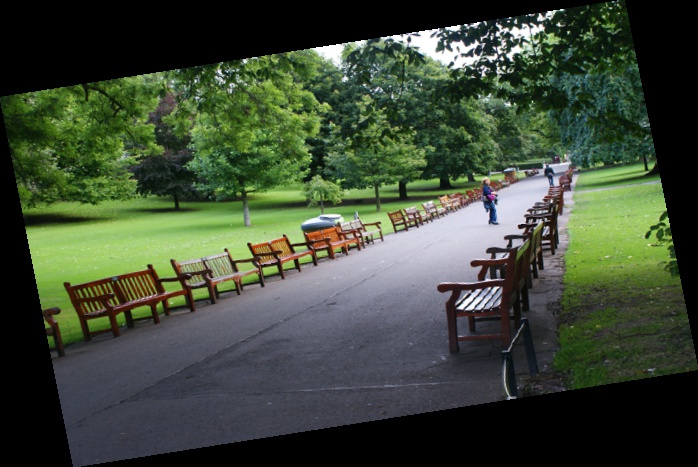
Princes Street Gardens is a very peaceful place to be, tranquil but alive with locals and tourists walking around, taking pictures, relaxing, or enjoying their lunch time. It took a while before I noticed that there is an engraved plaque on every bench; they are not just simple benches, they are Memorial Benches, representing stories of people who lived in Edinburgh or had just been there for a few weeks but fell immediately in love with this city. The benches are paid for by friends or family members so there is somewhere other than the graveyard to remember them. The inscriptions on the plaques are simple messages, illustrating how their closest friends felt about them, or what they had contributed to the life of the city. Once you notice these benches, you will see them everywhere around Edinburgh. They are not just in parks, but also in every public place you can imagine, like golf clubs, hospitals, and churches, as well as right along the garden side of Princes Street itself. Few of us had ever seen these kinds of benches in Europe before, so it is a very unique kind of remembrance.
“It really calms one down if you sit on one of the benches,” said a woman from France who has lived in Edinburgh for four years. You think about your own life and your own mortality. But there is this other side, the side that celebrates peoples’ lives while wondering about what job they had or where they loved to travel. Even if you are just in Edinburgh for a few days, take a little time and sit on one of the benches. You will sense an aura of peace.
Curso/CTR Travel Writing Team Edinburgh
Curso führt reise-journalistische Projekte in Edinburgh, Madrid und Berlin durch. Während ihres Aufenthaltes schreiben und layouten die Teilnehmer unter Anleitung von Journalisten, Layoutern und Projektmanagern aus Edinburgh, Madrid und Berlin ein Stadtmagazin, verbessern ihre Fremdsprachenkenntnisse und üben sich in interkultureller Kommunikation.
Posts mit dem Label eg werden angezeigt. Alle Posts anzeigen
Montag, 29. April 2013
So, ye’re into culture, aye?
Labels:
auslandspraktikum,
Bewertung,
Bewertungen,
curso,
curso24,
edinburgh,
eg,
erfahrungsbericht,
großbritannien,
journalistik,
praktikum,
reisejournalismus,
schottland,
student,
studium,
travel,
writing
Freitag, 12. April 2013
Behind the Scenes
The Underground Vaults! Do you like haunted places? Do you want to explore hidden areas? Learn more about the early history of Edinburgh? You don´t have to go to a single museum to get all of these experiences at once. Right underneath your feet, when you are standing on the Royal Mile or on nearly every other street in the Old Town, there is everything you are looking for. The Edinburgh vaults have a very long, distinguished, and turbulent history. They are far more than the gruesome places down below the city, where witches officiated over sinister rituals and criminals hid the bodies of their robbed and murdered victims.
Built in the 17th century around the South Bridge, the chambers were thought to be cheap working places for craftsmen. After just seven years of working and living underneath the pulsating streets of Edinburgh, the traders were forced to move out because there was no way to get fresh air into the vaults and it was damp and unhealthy. After the craftsmen moved out, criminals and the poorest of the poor moved in. The living conditions were hard to bear. Prostitutes, murderers, and the sick made their homes in this disgusting location.
But in the late 18th century occupation of the vaults came to an end – they were closed down and all the people living there had to search for new places to live. About 120 rooms lay forgotten for 100 years. But, fortunately for visitors, the Vaults were rediscovered. Great stories are told there nowadays – of personal fates, mysterious rituals and historical facts. Definitely worth a visit!
Team Curso/CTR Edinburgh
Sina Stahl
The Other Side of Edinburgh...Descend into Edinburgh’s underground vaults, find your way through the Dungeon, hang out at the cemetery, haunted by the worldfamous Mackenzie poltergeist and home of the loyal dog Bobby, and look for the Haggis monster! Listen to Edinburgh’s haunted tales and explore the city’s eerie places!Team Curso/CTR Edinburgh
Layla Ayobi
Labels:
ausbildung,
Bewertung,
Bewertungen,
curso,
curso24,
edinburgh,
eg,
erfahrungsbericht,
journalistik,
praktikum,
reisejournalismus,
studium,
travel,
writing
Dienstag, 2. April 2013
Feature: El Bocho
El Bocho is one of Berlin’s more prolific and well-known street artists, whose paste-ups can be found all around Friedrichshain, Prenzlauer Berg and Kreuzberg. His ‘Citizen’ campaign depicting fashionable young women looking morosely at the viewing public are in international demand and have spread to streets and galleries Paris, London and Sao Paulo. Among the more recent of his creations is the comic satire Little Lucy. These witty paste-ups are based on a Czech cartoon chronicling the adventures of a girl and her cat. In the hands of El Bocho, Little Lucy has taken a murderous turn and these days her cat can be found meeting a sticky and often comedic end. Be on the lookout as well for Kalle und Bernd, two sardonic security cameras who allow you to eavesdrop on their witty interludes but who serve as a harsh reminder of a time when secret police watched Berlin citizens very closely indeed. For a closer look at some of his work, head to Dirkstrasse in Mitte or Kollwitzstrasse in Prenzlauer Berg.
Team Curso/CTR Berlin
Cate Hopkins
Team Curso/CTR Berlin
Cate Hopkins
Labels:
berlin,
curso,
edinburgh,
eg,
el bocho,
erfahrungsbericht,
journalistik,
reisejournalismus,
street art,
studium,
travel,
writing
Dienstag, 26. März 2013
edinburgh.sco: The ‚Kiss‘ of Art
Literally a kiss is a physically affectionate act and means to press one’s lips against an object or another person. Originally it was based on the old English word cyssan and in the history of mankind it seems to be a late substitute for the rubbing of noses. In a metaphorical manner ‘a kiss’ can also mean a sort of inspiration, for instance ‘a kiss of the muse’, which brings enlightenment for artists in relation to their work.
Whether you prefer literature, paintings, music, dancing or storytelling, this city provides every artistic possibility you could ever wish for. Behind every corner there are museums, whether of Modern Art or Classical. Due to Scotland’s support for artists Edinburgh has a really impressive collection of art. One of the most memorable pieces on show in the National Gallery of Scotland is ‘The Kiss’ by the French sculptor Auguste Rodin, who lived from 1840 to 1917. The approximately two metres high sculpture shows an intense kiss between Paulo Malatesta and Francesca Da Rimini. ‘The Kiss’ refers to Dante’s ‘The Divine Comedy’ from the fourteenth century. The kissing couple was sentenced to death by Paolo’s older, jealous brother, the husband of Francesca, who recognises a truly deep, tragic love between the lovers. Doubtlessly the pentelic marble sculpture is one of the ‘greatest artistic evocations of physical love’. Rodin, who was famous for his ability to model the human body, was also passioned for showing the realistic, sensitive details of his sculptures. But it’s not only this romantic, physical kiss which spreads its spirit across the city of Edinburgh, it appears that a great divine muse has kissed Scotland’s capital right on the forehead and it appears quite obvious what makes Edinburgh so special for the pilgrimage of many artists. Imagine the ancient old part of Edinburgh, the majestic castle up on a hill in the middle of the city centre, a cobblestone pavement, Scott’s monument, buildings more than 150 years old, imposing churches and tiny paths between the houses. And everything is filled with historic tales or haunted horror stories. Together it enfolds the city with a unique, inspiring character and it is that interaction of a historically rich culture and an affinity to art which creates an incomparable spirit lying all over the city. This leads to one conclusion: Edinburgh simply is a big muse which kisses all its pilgrims, tourists or inhabitants. So you should see Edinburgh with all its artistic environment to get kissed by the muse. Here are some of the most important and impressive places you definitely should visit:
First of all go to the Scottish National Gallery in Princess Street. See the classical impressionists as well as huge portraits for instance by Gavin Hamilton and his ‘Achilles Mourning the Death of Patroclus’. Again of course, don’t miss ‘The Kiss’.
As a complete contrast you should visit the Scottish National Gallery of Modern Art...find out more
CTR Travel Writing Team Edinburgh 2013
Dominik Schlett
image by Team Edi March 2013
Labels:
ausbildung,
auslandspraktikum,
curso,
curso24,
edinburgh,
eg,
erfahrungsbericht,
großbritannien,
journalismus,
journalistik,
korrespondent,
praktikum,
reisejournalismus,
schottland,
student,
studium,
travel,
writing
Dienstag, 12. März 2013
Info Praktikum Reisejournalismus in Edinburgh und Barcelona
Die Curso/CTR Praktikumsprogramme Reisejournalismus in
Barcelona und Edinburgh zielen ab auf die Verbesserung der reisejournalistischen
Fachkenntnisse, der Sprachkenntnisse und der interkulturellen Kompetenz unserer
Praktikanten. Zum Abschluss eines Projektes entsteht ein Stadtmagazin, ein
Ergebnis auf das die Praktikanten stolz sein können. Unsere Absolventen seit
2007 arbeiten in Online- und Print Redaktionen, für Travel Organisationen, News
Agencies oder auch für die CTR Projekte in Europa. Die Praktikanten erhalten
ein Zeugnis und können das Magazin als Arbeitsprobe verwenden.
Die Praktikanten schreiben und layouten unter Anleitung von
lokalen Journalisten, Layoutern und Projektmanagern aus Barcelona und Edinburgh
ein Stadtmagazin, verbessern ihre Englisch- sowie Spanischkenntnisse und verbessern
ihre Kompetenzen in interkultureller Kommunikation.
Redaktion Curso/CTR
Labels:
appartement,
auslandspraktikum,
barcelona,
curso,
curso24,
edinburgh,
eg,
erfahrungsbericht,
journalismus,
journalistik,
ohne,
reisejournalismus,
spanien,
studium,
universität,
vermittlungskosten
Dienstag, 22. Januar 2013
Curso Praktikum Reisejournalismus und Französisch in Lyon
Die französische Metropole Lyon ist ein Platz zum Träumen. Auf unzähligen Fotos und vielen Filmen umspannt uns der Zauber dieser Stadt. Kommt man nach Lyon so stellt man fest: Lyon ist wirklich so. Eine tolle Nachricht für junge Leute mit reisejournalistischem Interesse und für Fans der französischen Metropole Lyon: das Projekt Französisch und Reisejournalismus in Lyon findet auch im Juli/August 2013 in der französischen Metropole statt.
Das Projekt ist für Studenten und junge Berufstätige mit starkem reise-journalistischem Interesse gedacht und gibt diesen die Möglichkeit, während eines drei- bis vierwöchigen Aufenthalts in Lyon ein professionelles Magazin zu produzieren. Die Praktikanten sind für alle Stufen des Entstehungsprozesses mit verantwortlich, angefangen bei der Recherche, bis hin zum Layout und Grafikdesign. Ihnen zur Seite stehen erfahrene Journalisten, Layouter und Koordinatoren aus Lyon, die ihnen die notwendigen Grundlagen in Workshops vermitteln und sie inhaltlich betreuen.
Wer nebst recherchieren, schreiben, layouten und fotografieren noch sein rostiges Französisch aufpolieren möchte, hat auch dazu die Gelegenheit. Selbst Sprachanfänger können sich nach drei Wochen Lyon in der französischen Sprache so weit zu recht finden, dass sie eigenständig im Restaurant bestellen können, oder sich im Dschungel der Großstadt durchfragen können. Trotzdem erhöhen erste Vorkenntnisse der französischen Sprache die Chance auf einen Platz im Programm.
Während der Nachmittage nehmen die Praktikanten an projektbezogenen Besuchen teil, führen Interviews und werden bei der Recherche für die Artikel des Magazins/Reiseführers durch Kollegen aus Lyon begleitet und von ihnen unterstützt. Die ausgewählten Kursteilnehmer müssen in nur drei Wochen ein Reisemagazin über Lyon verfassen, und dazu muss die Stadt natürlich erlebt werden.
Alle Menschen lieben Frankreich, auch wenn sie es noch gar nicht kennen. Auch Lyon steht für die Liebe, die Kultur und für revolutionäre Gedanken. Nutzen Sie die Gelegenheit, Ihr persönliches Lyon für sich zu entdecken. Lyon steckt voller architektonischer und künstlerischer Schätze. Jedes Viertel, jede Straße, jeder Park bietet neue Überraschungen. Das an der Rhone gelegene Lyon wird häufig auch als kulinarisches Paradies bezeichnet. Es mangelt nicht an einprägsamen Erlebnissen und Orten, wie beispielsweise der wundervollen Altstadt, der berühmten Maison de la Danse, sowie zahlreichen Festivals.
Die Praktikanten lernen die reisejournalistische Arbeit im Herzen von Lyon kennen. In den Workshops mit den Journalisten, Layoutern und Projektmanagern aus Lyon werden sie bei der Planung, Recherche und Korrektur der Artikel individuell beraten. Die Arbeitssprachen sind Englisch und Französisch. Es spielt keine Rolle, welche journalistischen Vorkenntnisse die Programmteilnehmer haben. Interesse und Motivation sind die einzige Grundbedingung. Jede gemachte Erfahrung hilft dabei, die eigenen Kenntnisse und Fähigkeiten zu erweitern. Und zu guter Letzt lernen unsere Teilnehmer neue Freunde kennen, mit denen sie gemeinsam die neue Umgebung erkunden können.
Curso/CTR führt die reise-journalistischen Projekte in Lyon, Berlin, Madrid, Barcelona und Edinburgh seit 2008 mehrmals pro Kalenderjahr durch. Auch im Sommer 2013 bieten wir Reisejournalismus Programme in Lyon an, die es den Praktikanten ermöglichen, eine andere Stadt und Kultur kennenzulernen, die Französischkenntnisse aufzufrischen und gleichzeitig ihre journalistischen Fähigkeiten zu entwickeln. Weitere Informationen zum Praktikumsprogramm Französisch und Reisejournalismus in Lyon finden Sie auf unserer
Webseite curso24.de .
Redaktion Curso/CTR
Labels:
ausbildung,
auslandspraktikum,
curso,
curso24,
eg,
frankreich,
französisch,
gap,
journalismus,
journalistik,
lyon,
praktikum,
reisejournalismus,
sprachreise,
studium,
travel,
writing
Dienstag, 4. Dezember 2012
Edinburgh mini
Edinburgh made me dreamy. It filled me with melancholy – luckily a good sort of melancholy, which gives me a sort of trust in my abilities. Nearly everyday I walked through the streets, saw all the different grey shapes ... and maybe for the first time in my life I really enjoyed the moods of November. I visited places like Arthur’s Seat and Greyfriars Cemetery, walked into old book shops, drank a lot of hot chocolate in pretty cafes or beer in famous pubs. And while doing all that, one word popped up in my head over and over again: enchanted.
Staying in Edinburgh – for me – felt like a pause from reality. There are ancient houses which become even more beautiful at night when their windows light up. You have to pass stony streets which sparkle in the rain and where the cars always come from the wrong side. Over the city there sits enthroned the Castle of Edinburgh like a guardian of the past. And at every corner you come across the melodic sound either of the bagpipe or the Scottish language.
…find out more
CTR Travel Writing Team Edinburgh 2012
Andrin Schumann and image by Miriam Steimer
Labels:
curso,
curso24,
da,
edinburgh,
eg,
großbritannien,
journalismus,
journalistik,
leonardo,
reisejournalismus,
schottland,
travel,
vinci,
weiterbildung,
writing
Donnerstag, 18. Oktober 2012
Unveiling Secret Edinburgh: Die Geschichten Greyfriars'
Labels:
auslandspraktikum,
curso,
curso24,
edinburgh,
eg,
großbritannien,
haggis,
jk rowling,
journalismus,
journalistik,
medien,
praktikum,
reisejournalismus,
schottland,
studium,
travel,
writing
Mittwoch, 17. Oktober 2012
Unveiling Secret Edinburgh: Schaurig-schönes Edinburgh
![]() |
| South Bridge Underground Vaults |
![]() |
| Greyfriars Kirkyard bei Tag |
![]() |
| Covenanters' Prison |
zum Artikel: Schaurig-schönes Edinburgh
Layla Ayobi
Labels:
auslandspraktikum,
Bewertung,
Bewertungen,
curso,
curso24,
edinburgh,
eg,
großbritannien,
journalismus,
journalistik,
praktikum,
reisejournalismus,
schottland,
studium,
travel,
writing
Dienstag, 10. Juli 2012
Wha’ ye talkin’ ‘bou’?
Even though only an extremely remote part of the Scottish population speaks Gaelic, it is still very important to them. According to the Scottish Parliament 81% of the population consider Gaelic an important part of the culture.
A very long time ago – it is not quite sure if hundreds or thousands of years – the language came to what is now Scotland. Its origins are most likely to be found in Northern Ireland. However, in the late Middle Ages Gaelic grew less important and was slowly replaced by the English language. It never vanished completely and can nowadays be learned in special schools. Scots is, like English, a Germanic language and has existed for centuries. It is not
related to Gaelic and should not be confused with a Scottish dialect in English. Even though both English and Scots have the same roots – the “Anglo Saxon” – they developed differently. Scots was influenced by several languages like French or Norwegian. You can often hear it in local pubs. Many families use it at home at the dinner table, and children use it to talk to each other. These days it is also encouraged in schools. “People here are very proud of their language. If you want to learn it you’ll have to go to a pub - it’s always easier with a beer”, a young Polish woman, who has lived in Edinburgh for about four years, says. Just like every language Scots has its dialects and variations which you can even recognize as a foreigner.
“Why should I speak Scots when talking to tourists? Nobody likes to repeat himself, right?”
Frank grew up in Glasgow. The Glaswegian dialect is a very special one because it is stronger than in the other parts of Scotland. “We roll the ‘r’ a lot more and leave out letters and syllables. But normally, everyone understands me just fine because I concentrate on speaking slowly.” Most of the people in Scotland’s capital speak English. Although it sounds different
than it does in England, it is easy to understand. Scots endeavour to talk as clearly and comprehensibly as possible when talking to tourists and foreigners. Normally, you do not have any problems to start a conversation with a Scotsman. Everyone is open-minded and used to tourists. So if you want to know more about culture and habits, all you have to do is ask. Everywhere you go you see different people from different cultures and countries of the world.
They have all found their way to Edinburgh - whether it is for a holiday, to study or permanently. One thing every one of them has is common: they had to learn a new language, or at least get used to a different dialect.
view sample
CTR Curso eG Travel Writing Team Edinburgh 2012
Labels:
ausbildung,
auslandspraktikum,
curso,
curso24,
edinburgh,
eg,
experience,
gap,
journalismus,
journalistik,
programme,
reisejournalismus,
studium,
travel,
work,
writing
Abonnieren
Posts (Atom)